Heritage Photograph Preservation

Restored, not reimagined.

Your great-grandmother’s face — restored with the same care a master photo conservator would bring. AI does the routine work. A human Conservator finishes the difficult cases.

The Standard

Why most AI restoration fails —and how we prevent it.

Nine specific ways consumer AI photo apps damage your memories. We engineered around every one. Read the full Standard for the receipts.

01Halo and ghosting

What happens: Consumer apps run a generic upscaler that treats faces like wallpaper textures, leaving halos and ghost edges around hairlines and glasses.

How we prevent it: Our pipeline runs face-aware restoration that recognizes facial regions and treats them as their own preservation problem.

Full treatment in the Standard →

02Texture mismatch

What happens: Smoothing the photographic grain away makes the result look like a modern phone capture pretending to be old.

How we prevent it: We preserve the photographic grain that anchors the photograph in its era.

Full treatment in the Standard →

03Facial reconstruction drift

What happens: Generic models drift toward average faces — your grandmother starts to look like someone else’s grandmother.

How we prevent it: Identity-preservation guardrails catch the drift; outputs that show measurable identity shift route to human review before shipping.

Full treatment in the Standard →

04Plastic skin

What happens: Plastic, airbrushed skin is the signature of consumer AI restoration — it erases the lines and shadows that make a face recognizable.

How we prevent it: We preserve identifying detail — pores, lines, shadows — because those are what make a face the face you remember.

Full treatment in the Standard →

05Temporal inconsistency

What happens: A 1940s portrait returns looking like 2020s digital art, with modern lighting and contrast on a vintage subject.

How we prevent it: Our pipeline anchors restoration to the era of the original through colorization decisions, contrast handling, and stylistic choices that respect the source.

Full treatment in the Standard →

06Depth and contrast loss

What happens: Many AI restorers flatten the tonal architecture of the original — the dark areas brighten uniformly, the highlights blow out.

How we prevent it: We preserve the depth and contrast curve of the source photograph.

Full treatment in the Standard →

07Synthetic noise patterns

What happens: Some restorers add fake film grain to make outputs look authentic, layering invented noise on top of the original.

How we prevent it: We do not insert noise. Whatever grain the original photograph carries is what the restoration carries.

Full treatment in the Standard →

08Hallucinated details

What happens: AI models invent faces, jewelry, clothing patterns, and text that were never in the original.

How we prevent it: Our damage-check stage compares the restoration to the original on a checklist of known invention modes. Anything that appears in the output but not the input rejects the photograph and routes it to human review.

Full treatment in the Standard →

09Hand and finger failures

What happens: Hands are where AI restorers most often invent — extra fingers, missing fingers, hands that don’t connect to wrists.

How we prevent it: When a photograph needs hand reconstruction, we route it to a human Conservator rather than risk the failure mode.

Full treatment in the Standard →

You've Thought About Doing Something

Every option out there asks you to make an impossible trade-off.

Ship your irreplaceables to a stranger

Most scanning services want you to mail your only copies across the country. Weeks turn into months. Customer forums are full of horror stories — lost slides, missing files, originals returned out of order. These aren’t replaceable.

Get back someone else’s face

Consumer AI apps don’t restore your photos — they generate new faces from training data. Grandma comes back with someone else’s eyes. The industry just made headlines for turning family photos into ‘grotesque nightmare fuel.’ That’s not preservation.

Pay studio prices for the whole box

Professional restorers do beautiful work — at $35 to $100 per photo. For one precious image, maybe. But you don’t have one photo. You have a whole box. At those prices, preserving your family’s full history costs thousands.

A Different Approach

What If You Could Restorethe Entire Box?

Legacy Vault is photo preservation built for the whole collection — not just one precious frame. Upload from your phone, never mail a thing. Every photo is surgically restored, permanently stored in an encrypted vault, and shareable with your entire family through secure links.

One-time restoration pricing that makes the whole box affordable. So your kids, and their kids, and their kids after that, will know the faces and the stories of everyone who came before them.

The Process

Not a filter.A restoration.

Every photograph runs the same precision pipeline. AI handles the routine work. A human Conservator finishes the difficult cases.

Original damaged photo
01

Upload from your phone

Your originals stay home

Snap a photo of a print or upload a scan. No shipping, no scanners, no special equipment. Your irreplaceable originals never leave your hands.

02

AI restoration with identity preservation

Color, light, and tone — restored. Faces — preserved.

Decades of fading reversed. Yellowed tones corrected. Faces enhanced ONLY in ways that preserve the person. No invented detail. No AI-generated faces. Every restoration passes a damage-check before delivery.

03

Conservator review for difficult cases

A human eye on the work that matters most

When a photograph has heavy damage or our damage-check flags a difficult case, a Conservator hand-finishes it. You receive the result with the same care a master photo restorer would apply — without the studio price.

Fully restored photo
Restored

The Proof

Real restorations, across the decades.

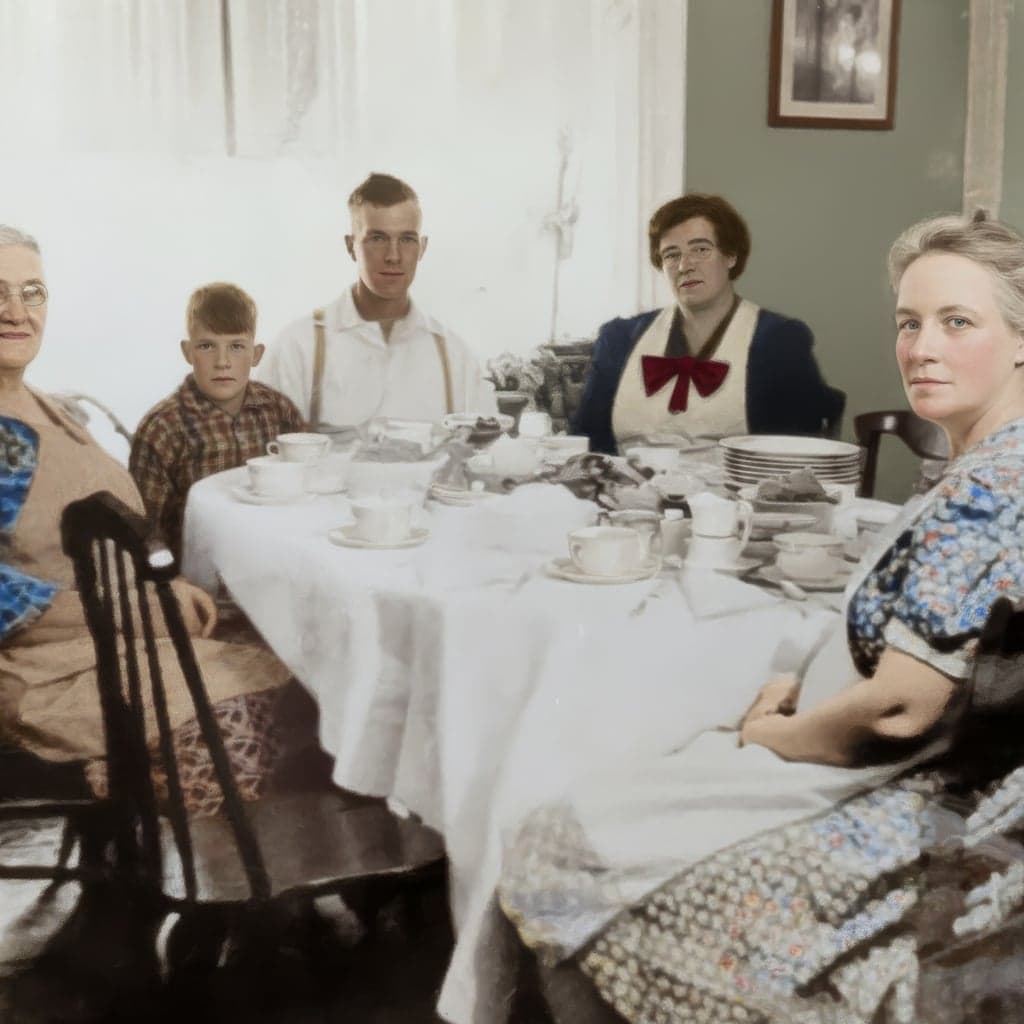
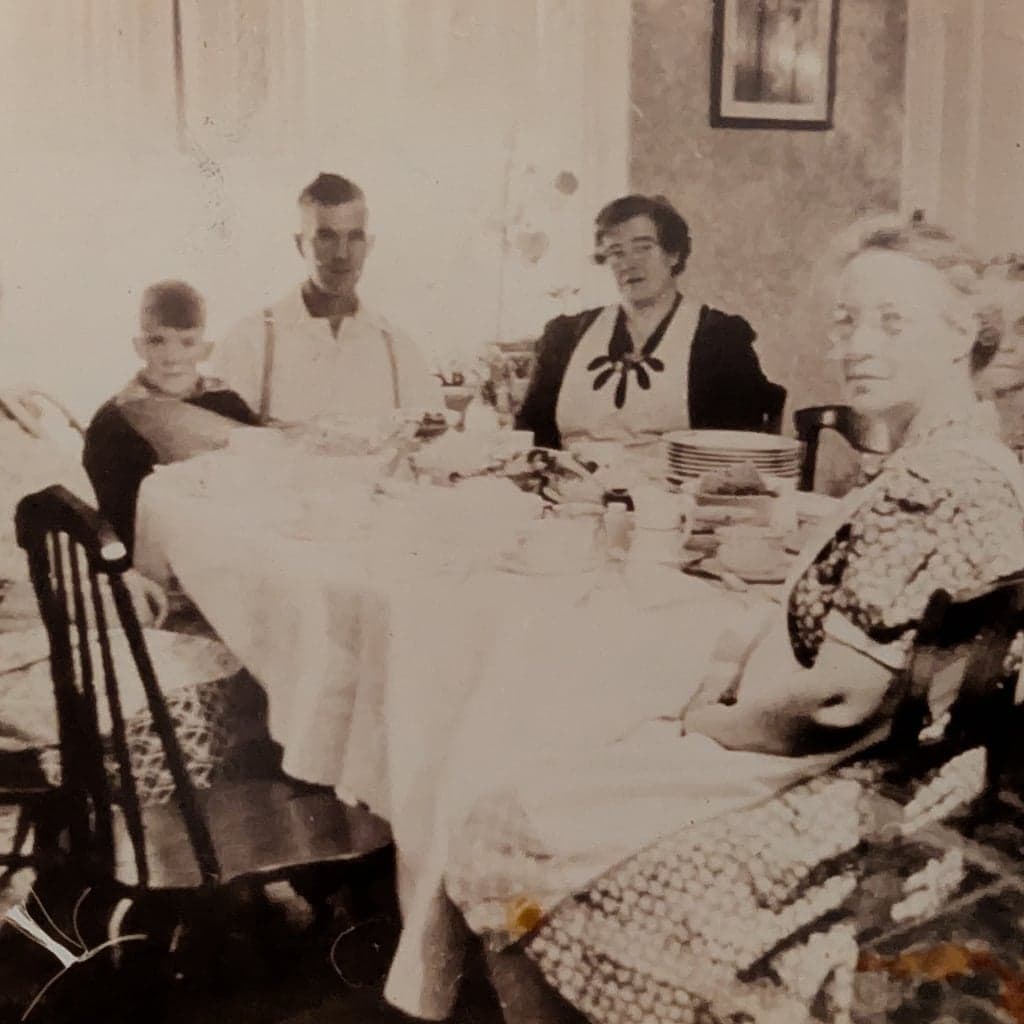
Drag the slider to see actual restorations from our archive. No staging. No filters. The same pipeline every customer runs.

After
1940s Family scene — before restoration
Before
Restored

1940sFamily scene

Damage repaired: Faded contrast, sepia tone shift, surface haze. Period-faithful colorization.

Your Vault

Safe. Shared.Always Yours.

Every restored photo lives in your private, encrypted vault — accessible from any device, shareable with family.

Encrypted Storage

Your photos are encrypted at rest and in transit. Bank-grade AES-256 encryption ensures nobody sees your memories but you and the people you choose.

Phone to Vault

Snap a photo with your phone camera and it’s in your vault in seconds. No cables, no scanners, no technical knowledge required.

Always Available

Access your photos from any device, anywhere, anytime.

Family Sharing

Designed so your vault can be shared with the people you choose. Multi-account access from any device — no app required, just a web browser.

Your Photos Forever

No compression, no quality loss. Originals preserved as-is.

Print-Ready Downloads

Download restored photos at full resolution for reprinting.

30 days free vault storage with every order

Pricing

Pricing

One photograph or one thousand. The math gets better with the box.

  • Your first photograph$1.50

    See what we deliver before you commit.

  • 2 – 50 photographs$1.30 / photo
  • 51 – 200 photographs$1.00 / photo
  • 201 – 500 photographs$0.85 / photo
  • 501+ photographs$0.70 / photo

One-time fee per photograph. No subscriptions. Volume pricing applied automatically at checkout.

For collections of 500+ photographs we also offer hand-finished in-person service in select locations. Contact us for details.

FAQ

Questions & Answers

No. Our restoration enhances what’s already in the photograph — it doesn’t generate new faces from training data. Every wrinkle, smile line, and characteristic feature is preserved. Grandma still looks like grandma.

Absolutely. Snap a photo of the print with your phone camera and upload it directly. No scanners, no cables, no special equipment. For best results, use good lighting and lay the photograph flat — our pipeline handles the rest.

Start with one photograph for $1.50. Standard restoration is $8 per photograph; volume pricing kicks in automatically (51–200 photographs at $5 each, 201–500 at $3 each). For 500+ photographs, our archive packages (Family / Estate / Heritage) bundle the whole collection at a fixed price.

You can download all your restored photographs at full resolution anytime during the 30 days — they’re yours to keep. After 30 days, your downloads remain on your devices. If you want ongoing cloud storage and family sharing, ask us about the vault — it’s how we keep the collection accessible from anywhere.

Your vault is designed to be shared with the people you choose. Each viewer gets their own access from any device — no app required, just a web browser. The email-invitation flow is rolling out gradually; reach out if you want to share a vault with family right now and we’ll set it up by hand.

Yes — for sizes up to 11x14 inches, the digital files we deliver are well-suited to home or print-shop printing. For fine-art prints at 16x20 or larger, we offer a hand-finished print preparation tier: we work the photograph in our Conservator workspace, prepare a print master at archival quality, and coordinate with our print lab. Reach out for a quote on a specific large print.

Consumer apps apply a single generic filter to every photograph. We run a precision pipeline focused on identity preservation: AI handles color and tonal restoration with strict identity-check guardrails, and a human Conservator hand-finishes any photograph our damage-check flags as difficult. The difference is most visible on faces — your family looks like your family, not a generated approximation.

Most orders are completed within 24–48 hours. Larger orders (100+ photographs) may take up to 72 hours. You’ll receive an email notification the moment your photographs are ready.

Yes. Our colorization analyzes the era, clothing, setting, and context of the photograph to apply historically faithful colors. The results read as natural — not the garish tints you see from basic colorization tools.

JPEG, PNG, and TIFF. If you’re photographing prints with your phone, save as JPEG — most camera apps do this by default. We handle the rest.

Yes. Photographs are encrypted at rest (AES-256) and in transit (TLS 1.3). We never use your photographs for AI training, marketing, or any purpose other than your restoration order. You own your photographs — period.

If you’re not happy with a restoration, we’ll re-process it with adjusted settings at no charge. If you’re still unsatisfied, we offer a full refund — reach out and we’ll make it right.